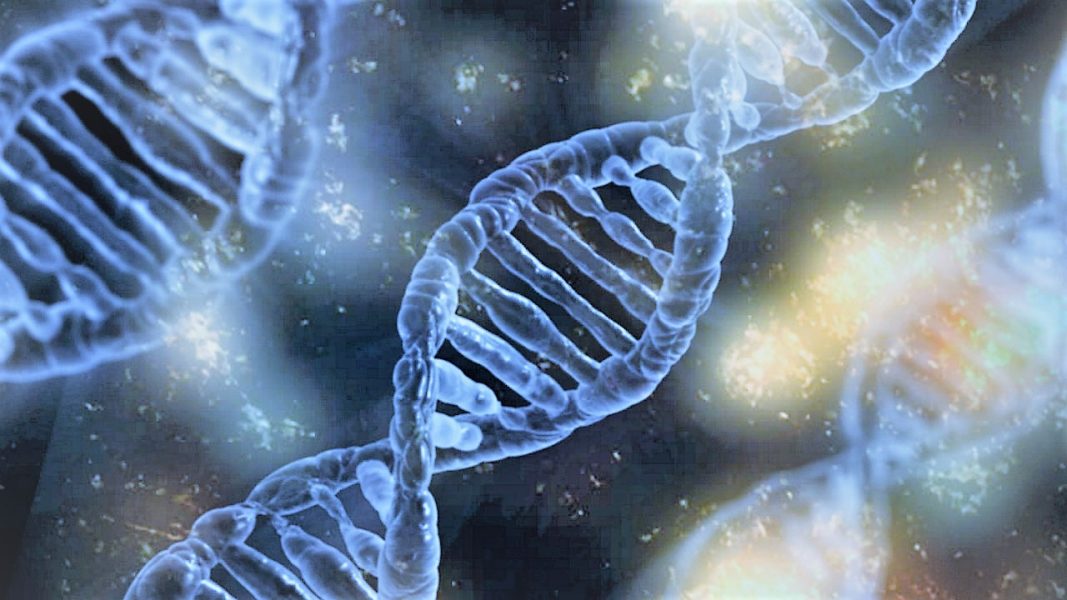
DNA Nanotechnology is an interdisciplinary field that leverages the unique properties of deoxyribonucleic acid (DNA) as a programmable building material to construct nanoscale structures, devices, and systems. Unlike traditional biotechnology, which primarily uses DNA for genetic information storage and manipulation, DNA nanotechnology treats DNA strands as modular components for self-assembly into precise architectures. This approach exploits DNA’s Watson-Crick base pairing (A with T, G with C) to design complex shapes and functional nanomaterials.
The field was pioneered in the early 1980s by Nadrian C. Seeman, who envisioned using DNA’s branching motifs to create junctions and lattices. Seeman’s work laid the foundation for what has become a vibrant area at the intersection of chemistry, biology, physics, and engineering. A breakthrough came in 2006 with Paul Rothemund’s “DNA origami,” enabling the folding of long DNA strands into arbitrary 2D and 3D shapes.
By 2025, DNA nanotechnology has matured into a multibillion-dollar market, driven by applications in drug delivery, biosensing, molecular computing, and materials science. Global investments, particularly in North America, Europe, and Asia, support rapid advancements, with thousands of publications annually and commercial ventures like those from Touchlight Genetics or Nanobiosym. The technology promises revolutionary impacts in personalized medicine, nanoelectronics, and sustainable materials, though challenges in scalability and stability persist.
Principles and Fundamentals
DNA Nanotechnology relies on the predictable self-assembly of DNA strands. Key principles include:
- Base Pairing and Hybridization: Complementary sequences form double helices, allowing precise control over structure formation.
- Sequence Design: Custom oligonucleotides (short DNA strands) are synthesized to fold into desired shapes, using software like caDNAno or NUPACK for prediction.
- Structural Motifs: Holliday junctions (branched DNA), sticky ends for ligation, and crossovers enable 2D tiles or 3D lattices.
- Thermodynamics: Assembly occurs under controlled conditions (temperature, salt concentration) to favor stable hybrids.
The nanoscale dimensions—DNA double helix is ~2 nm wide, with 0.34 nm per base pair—allow structures from 1-100 nm, bridging molecular and macroscopic scales.
Techniques and Methods
Several techniques define DNA nanotechnology:
- DNA Tiles and Lattices: Seeman’s approach assembles branched DNA into 2D arrays or 3D crystals, used for templating nanomaterials.
- DNA Origami: Rothemund’s method folds a long scaffold strand (e.g., M13 bacteriophage DNA, ~7,000 bases) with hundreds of short “staple” strands into custom shapes like smiley faces or maps.
- Single-Stranded Tiles (SST): Yin and colleagues’ brick-like method builds complex 3D structures from short oligonucleotides.
- Wireframe DNA Nanostructures: Uses graph theory to design polyhedral frames, enabling larger, hollow structures.
- Dynamic DNA Nanotechnology: Incorporates strand displacement for reconfigurable devices, like walkers or logic gates.
Synthesis typically involves automated oligonucleotide synthesizers, followed by thermal annealing for self-assembly. Characterization uses atomic force microscopy (AFM), transmission electron microscopy (TEM), or cryo-EM for visualization.
Key Structures and Devices
- 2D Shapes: Smiley faces, maps, or lattices for surface patterning.
- 3D Objects: Cubes, tetrahedrons, or virus-like capsules for drug encapsulation.
- Nanomachines: Walkers that “step” along tracks, rotors, or switches responsive to stimuli like pH or light.
- Computing Devices: Logic gates, calculators, or neural networks using strand displacement cascades.
These enable “smart” materials that respond to environmental cues.
Advantages and Challenges
Advantages:
- Biocompatibility and biodegradability.
- Atomic precision in assembly.
- Programmability for custom designs.
- Low cost of DNA synthesis (~$0.01 per base).
Challenges:
- Scalability: Producing gram quantities remains expensive.
- Stability: Enzymatic degradation in vivo; requires modifications like locked nucleic acids (LNA).
- Cellular Delivery: Efficient uptake and function in biological systems.
- Toxicity: Potential immune responses to foreign DNA.
Current Developments and Market
In 2025, DNA nanotechnology is transitioning from research to commercialization. Companies like Ginkgo Bioworks and Twist Bioscience supply custom DNA, while startups develop DNA-based diagnostics (e.g., nanosensors for pathogens) and therapeutics (e.g., targeted drug delivery).
The market for DNA nanotechnology is estimated at USD 2-5 billion, growing at 15-20% CAGR, with applications in healthcare dominating.
Future Prospects
Emerging areas include DNA data storage (encoding information in sequences), nanorobots for surgery, and hybrid materials with proteins or nanoparticles. Challenges like in vivo stability are addressed through chemical modifications and encapsulation.
DNA nanotechnology holds transformative potential, merging biology with engineering for next-generation technologies in medicine, computing, and materials. Ongoing research promises breakthroughs in precision medicine and beyond.
More articles by ZMR Researche:
https://www.zionmarketresearch.com/de/report/shapewear-market
https://www.zionmarketresearch.com/de/report/bismaleimide-triazine-bt-resin-market
https://www.zionmarketresearch.com/de/report/hepa-filters-market
https://www.zionmarketresearch.com/de/report/liquid-crystalline-polymers-market
https://www.zionmarketresearch.com/de/report/medical-device-complaint-management-market