Bakuchiol is a meroterpene phenol derived from the seeds and leaves of the plant Psoralea corylifolia (commonly known as babchi), a member of the Fabaceae family native to India and widely used in traditional Ayurvedic and Chinese medicine. Chemically, it is a monoterpene derivative of resveratrol-like structure (C₁₈H₂₄O), making it a plant-based, vegan alternative to retinol (vitamin A derivative) in skincare formulations. Bakuchiol has gained significant popularity in the cosmetics industry since the mid-2010s as a “natural retinol” due to its comparable anti-aging, anti-acne, and skin-brightening effects without the irritation, photosensitivity, or instability associated with retinoids.
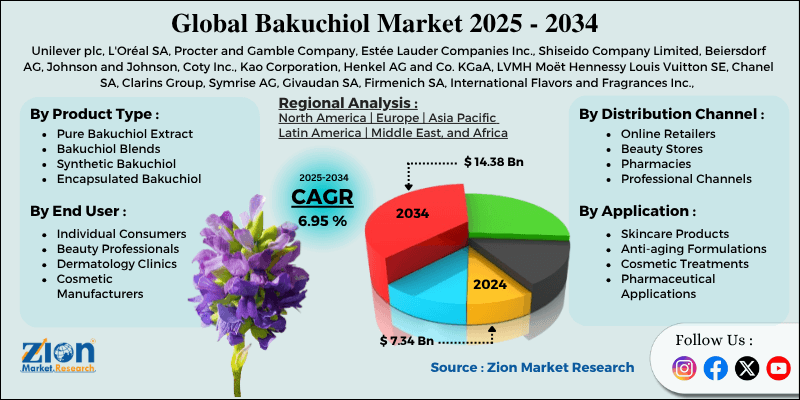
First isolated in 1966 by Mehta et al. from P. corylifolia seeds, bakuchiol’s skincare potential was recognized in the early 2000s through in vitro studies showing retinol-like gene expression modulation. Commercial adoption accelerated around 2015-2018 with clinical trials demonstrating efficacy and tolerability. As of 2025, the Global Bakuchiol Market is valued at approximately USD 50-100 million within the broader USD 10+ billion natural skincare actives segment, growing at 15-20% CAGR due to clean beauty trends, retinol sensitivity concerns, and demand for pregnancy-safe alternatives. Leading suppliers include Sytheon (Sytenol A, patented standardized bakuchiol), BASF, and Clariant, with concentrations typically 0.5-2% in serums, creams, and oils.
Bakuchiol represents a bridge between traditional herbal medicine and modern dermatology, offering evidence-backed benefits with a gentle profile.
Chemical Structure and Properties
Bakuchiol (systematic name: (S)-bakuchiol) features:
- A phenolic ring with a monoterpene side chain.
- Molecular weight: 256.38 g/mol.
- Appearance: Viscous, pale yellow oil.
- Solubility: Oil-soluble; stable in formulations.
- No structural relation to retinoids but functional mimicry via similar gene pathways.
Key advantages over retinol:
- Photostable (no degradation in light).
- Non-irritating.
- Stable pH range.
Natural extraction: Seeds yield 0.1-0.3%; purified to 95-99%.
Sources and Extraction
Primary source: Psoralea corylifolia seeds (babchi oil traditionally used for vitiligo, psoriasis). Sustainable concerns: Overharvesting; cultivated farms emerging. Extraction: Supercritical CO₂ or solvent (ethanol/hexane); purification via chromatography.
Synthetic bakuchiol under development for consistency/scalability.
Mechanism of Action
Bakuchiol exhibits “retinol-like” activity without binding retinoic acid receptors:
- Upregulates collagen I, III, IV production.
- Inhibits matrix metalloproteinases (MMPs) that degrade collagen.
- Modulates gene expression (similar to retinol in microarray studies).
- Antioxidant: Neutralizes free radicals.
- Anti-inflammatory: Downregulates pro-inflammatory cytokines.
- Regulates sebum production, antibacterial (Propionibacterium acnes).
Key pathways:
- RAR-independent retinoid signaling.
- PPAR activation.
- Nrf2 antioxidant response.
Gentler: No retinoid receptor agonism → less irritation.
Benefits and Clinical Evidence
Bakuchiol is backed by growing clinical data:
- Anti-Aging
- Reduces fine lines, wrinkles, hyperpigmentation.
- Landmark 2014 study (12 weeks, 0.5% bakuchiol vs. 0.5% retinol): Comparable improvements in wrinkles/photoaging; bakuchiol better tolerated.
- 2019 randomized trial: Significant elasticity, firmness gains.
- Acne
- Reduces lesions, post-inflammatory hyperpigmentation.
- 2020 study: 1% bakuchiol comparable to 2.5% benzoyl peroxide with less dryness.
- Hyperpigmentation
- Inhibits tyrosinase; evens tone.
- Skin Barrier and Sensitivity
- Suitable for rosacea, eczema-prone.
- Pregnancy-safe (no teratogenic risk like retinoids).
- Antioxidant and Soothing
- Protects against pollution, blue light.
Evidence level: Moderate-strong for anti-aging/acne; multiple RCTs (44-60 participants), though larger/long-term studies needed.

Uses in Skincare
Typical concentrations: 0.5-2%. Products:
- Serums (fast absorption).
- Moisturizers.
- Eye creams.
- Cleansers.
Combinations:
- With niacinamide, hyaluronic acid, peptides.
- Daytime use (no photosensitivity).
Brands: The Ordinary, Paula’s Choice, Herbivore, Omorovicza, Inkey List.
Safety Profile
- Well-tolerated; low irritation potential.
- Patch test recommended.
- No photosensitization.
- Pregnancy/breastfeeding: Generally considered safe (unlike retinoids).
- Allergic reactions rare.
Regulatory: Cosmetic ingredient; no restrictions.
Comparison with Retinol
| Aspect | Bakuchiol | Retinol |
|---|---|---|
| Source | Plant (babchi) | Synthetic/vitamin A derivative |
| Potency | Milder | Stronger |
| Irritation | Low | High (retinoid dermatitis) |
| Photosensitivity | None | High (use at night, SPF required) |
| Stability | High | Low (air/light sensitive) |
| Pregnancy Safety | Yes | No |
| Onset | Slower (4-12 weeks) | Faster (4-8 weeks) |
Bakuchiol ideal for sensitive skin, beginners, daytime.
Market and Trends
- Clean beauty boom.
- Vegan/natural positioning.
- Combination products (bakuchiol + retinol for tolerance).
- Men’s grooming.
- Asia-Pacific growth (traditional babchi use).
Sustainability: Ethical sourcing, lab-grown alternatives.
Limitations and Considerations
- Slower results than prescription retinoids.
- Variable potency (standardization key).
- Cost premium vs. basic retinol.
- Limited long-term data (>1 year).
Conclusion
Bakuchiol has emerged as a gentle, effective plant-based alternative to retinol, delivering meaningful anti-aging, acne, and brightening benefits with superior tolerability. Backed by clinical studies and traditional use, it suits sensitive, pregnant, or daytime routines where retinoids fall short. As clean beauty and personalization trends accelerate, bakuchiol’s stability and versatility ensure continued prominence in modern skincare. Quality sourcing (95%+ purity) and realistic expectations maximize outcomes.
More articles by ZMR Researche:
https://www.zionmarketresearch.com/de/report/process-gas-compressor-market
https://www.zionmarketresearch.com/de/report/sintered-zns-lenses-market
https://www.zionmarketresearch.com/de/report/flight-demonstrator-market
https://www.zionmarketresearch.com/de/report/novel-smart-textile-market
https://www.zionmarketresearch.com/de/report/agricultural-shade-nets-market