Forensic Laboratory Equipment comprises specialized tools and instruments used to collect, preserve, analyze, and interpret physical evidence from crime scenes. These technologies support criminal investigations, ensuring accurate, reliable results admissible in court. From basic microscopes to advanced DNA sequencers, forensic labs rely on a wide array of equipment across disciplines like toxicology, ballistics, and digital forensics.
The global forensic lab equipment market is experiencing steady growth, valued at approximately USD 1.3–4.4 billion in recent estimates (varying by scope), projected to reach USD 2.1–7.5 billion by 2030–2035 with CAGRs of 5–8.5%, driven by rising crime rates, technological advancements, and increased government funding for forensic infrastructure.
History of Forensic Lab Equipment
Forensic science equipment has evolved from rudimentary tools to sophisticated digital systems. Early applications date back to ancient times, with the first recorded autopsy in 44 BCE and Chinese use of fingerprints in the 7th century. The 19th century marked significant progress: Mathieu Orfila pioneered toxicology in 1814, Alphonse Bertillon developed anthropometry in the 1880s, and Francis Galton advanced fingerprinting.
The 20th century brought breakthroughs: Edmond Locard’s exchange principle (1910) laid the foundation for trace evidence analysis. The first U.S. crime lab opened in 1923 (Los Angeles), equipped with basic microscopes and chemical tests. Post-WWII advancements included gas chromatography (1950s) and DNA profiling (Alec Jeffreys, 1984). The 21st century introduced next-generation sequencing (NGS), automated fingerprint identification systems (AFIS), and rapid DNA analyzers, revolutionizing speed and accuracy.
Key Categories of Forensic Lab Equipment
Forensic labs use diverse equipment tailored to evidence types.
Microscopy and Imaging
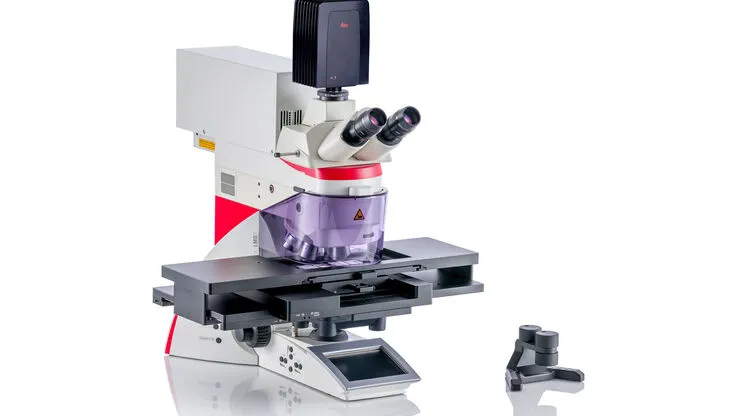
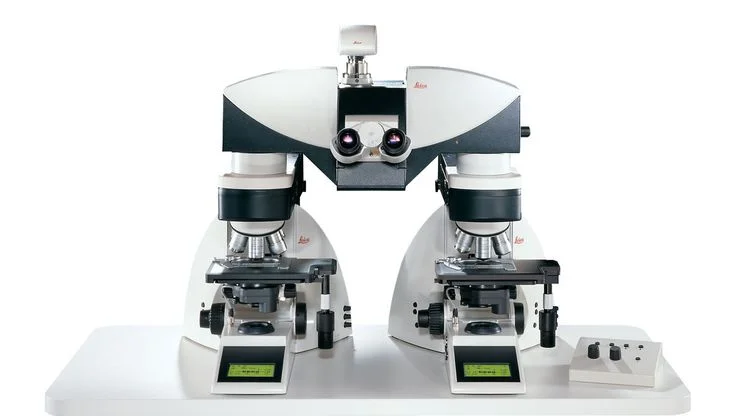
- Comparison Microscopes: For side-by-side analysis of bullets, fibers, or tool marks.
- Stereo and Compound Microscopes: Examine trace evidence like hair, paint chips.
- Scanning Electron Microscopes (SEM): High-resolution imaging with elemental analysis.
DNA and Biological Analysis
- PCR Thermal Cyclers and NGS Systems: Amplify and sequence DNA for profiling.
- Capillary Electrophoresis Instruments: Separate DNA fragments.
- Rapid DNA Analyzers: Field-portable for quick results.
Chemical and Toxicology Analysis
- Gas Chromatography-Mass Spectrometry (GC-MS): Identify drugs, explosives, toxins.
- Liquid Chromatography (LC/MS): Analyze non-volatile compounds.
- FT-IR and UV-Vis Spectrometers: Material identification.
Fingerprint and Biometrics
- Automated Fingerprint Identification Systems (AFIS): Database matching.
- Fuming Chambers and Powders: Develop latent prints.
- Alternative Light Sources (ALS): Visualize prints on various surfaces.
Other Essential Tools
- Fume Hoods and Evidence Drying Cabinets: Safe handling of chemicals/evidence.
- Ballistics Comparison Systems: Firearm/tool mark analysis.
- Digital Forensics Workstations: Data extraction from devices.
- Low-Temperature Storage: Preserve biological samples.
Applications
Equipment supports key forensic areas:
- DNA Analysis: Dominant segment, for identification and paternity.
- Toxicology/Drug Testing: Detect substances in biological samples.
- Trace Evidence: Fibers, paint, glass via microscopy/spectroscopy.
- Ballistics and Firearms: Match bullets/casings.
- Digital Forensics: Recover data from devices.
Advantages and Challenges
Advantages:
- High accuracy and sensitivity (e.g., NGS detects minute DNA).
- Faster processing reduces backlogs.
- Admissibility in court with standardized protocols.
Challenges:
- High costs limit access in developing regions.
- Need for skilled operators and maintenance.
- Contamination risks; ethical/privacy concerns with DNA databases.
Market Trends and Key Players
Growth is fueled by NGS adoption, portable devices, and AI integration for analysis. Major players include Thermo Fisher Scientific, Agilent Technologies, QIAGEN, PerkinElmer, and Illumina. North America leads, followed by Europe and Asia-Pacific.
In conclusion, forensic lab equipment is indispensable for modern justice systems, evolving rapidly to meet investigative demands. Investments in technology continue to enhance accuracy and efficiency, aiding in solving complex cases. For specific needs, consult standards like ISO 17025 or manufacturers for accredited solutions.
More articles by ZMR Researche:
https://www.zionmarketresearch.com/de/report/plastic-paper-plate-market-size
https://www.zionmarketresearch.com/de/report/low-iron-glass-market
https://www.zionmarketresearch.com/de/report/print-management-market
https://www.zionmarketresearch.com/de/report/grain-oriented-electrical-steel-market
https://www.zionmarketresearch.com/de/report/piperazine-pip-market