Medical radioisotopes are radioactive substances used in nuclear medicine for diagnostic imaging and therapeutic applications. These isotopes emit radiation—gamma rays for imaging (e.g., SPECT, PET) or alpha/beta particles for targeted therapy—that allows non-invasive visualization of organ function, detection of disease, and precise treatment of conditions like cancer.
Nuclear medicine procedures number over 50 million annually worldwide, with diagnostic scans comprising the vast majority. The most common isotope, technetium-99m (Tc-99m), accounts for ~80-85% of all diagnostic procedures. Therapeutic isotopes like iodine-131 (I-131), lutetium-177 (Lu-177), and emerging alpha-emitters (e.g., actinium-225) are expanding rapidly in precision oncology.
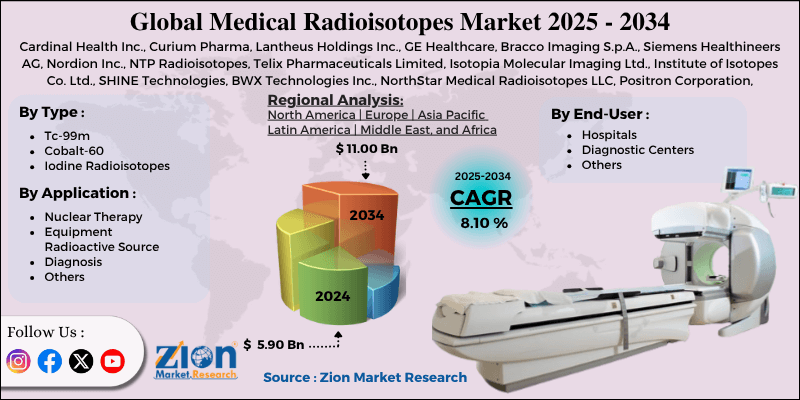
The Global Medical Radioisotopes Market is valued at approximately USD 7-10 billion in 2025, projected to reach USD 12-22 billion by 2030-2035 at a CAGR of 8-10%. Growth is fueled by rising cancer/cardiovascular prevalence, expansion of PET imaging, theranostics (diagnosis + therapy), and efforts to diversify supply chains beyond aging reactors. Challenges include chronic supply shortages (especially Mo-99/Tc-99m), short half-lives requiring just-in-time logistics, and high production costs.
Major Medical Radioisotopes
The field relies on a handful of key isotopes, each with specific production methods and applications.
Diagnostic Isotopes
- Technetium-99m (Tc-99m)
- Half-life: 6 hours.
- Primary use: ~80-85% of nuclear medicine procedures (SPECT imaging of heart, bones, thyroid, brain).
- Production: Decay of molybdenum-99 (Mo-99) in generators; Mo-99 from fission reactors (HEU/LEU targets) or increasingly cyclotron-based (Mo-100(p,2n)).
- Supply: Chronic shortages due to aging reactors; global demand ~30-40 million doses/year.
- Fluorine-18 (F-18)
- Half-life: 110 minutes.
- Primary use: PET imaging (FDG for oncology, neurology, cardiology).
- Production: Cyclotron (proton bombardment of oxygen-18 enriched water).
- Widely distributed; short half-life limits to nearby cyclotrons.
- Gallium-68 (Ga-68)
- Half-life: 68 minutes.
- Primary use: PET imaging (PSMA for prostate cancer, DOTATATE for neuroendocrine tumors).
- Production: Cyclotron (Ge-68/Ga-68 generator) or direct cyclotron production.
- Rapid growth in theranostics.
- Iodine-123 (I-123)
- Half-life: 13 hours.
- Use: Thyroid imaging (preferred over I-131 due to lower radiation).
- Other Diagnostic
- Thallium-201: Cardiac imaging.
- Indium-111: Infection/inflammation imaging.
Therapeutic Isotopes
- Iodine-131 (I-131)
- Half-life: 8 days.
- Use: Thyroid cancer/hyperthyroidism treatment.
- Lutetium-177 (Lu-177)
- Half-life: 6.7 days.
- Use: Targeted therapy (neuroendocrine tumors, prostate cancer via PSMA).
- Production: Reactor (neutron capture) or cyclotron.
- Actinium-225 (Ac-225)
- Alpha-emitter; short range, high energy.
- Use: Emerging targeted alpha therapy (TAT) for metastatic cancer.
- Other Therapeutic
- Yttrium-90, Samarium-153, Radium-223 (bone metastases).
Production Methods
Two primary pathways:
- Nuclear Reactors
- Neutron irradiation of targets.
- Dominant for Mo-99 (Tc-99m parent), I-131, Lu-177.
- Advantages: High yield.
- Challenges: Aging reactors (NRU Canada retired, others scheduled), HEU phase-out, supply fragility.
- Particle Accelerators (Cyclotrons/LINACs)
- Proton/deuteron bombardment.
- Dominant for F-18, Ga-68, Cu-64, Zr-89.
- Emerging for direct Tc-99m, Ac-225.
- Advantages: On-site production, no proliferation risk.
- Challenges: Lower yield for some isotopes.
Generators (e.g., Mo-99/Tc-99m, Ge-68/Ga-68) enable hospital-level distribution.
Applications in Medicine
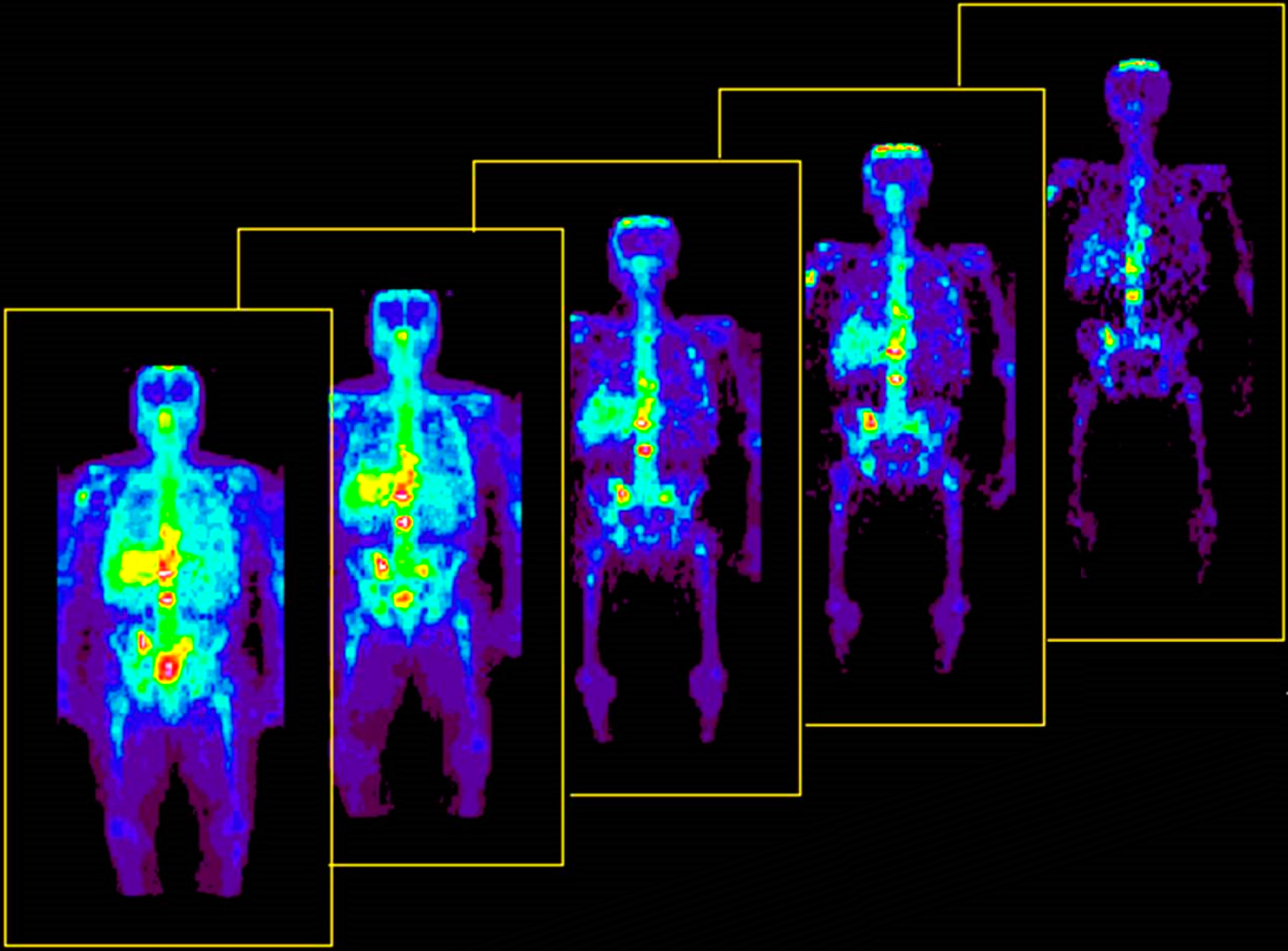
- Diagnostic Imaging
- SPECT (Tc-99m): ~80% of procedures (myocardial perfusion, bone scans).
- PET (F-18, Ga-68): Oncology, neurology, cardiology.
- Therapy (Theranostics)
- Paired diagnostic/therapeutic isotopes (Ga-68/Lu-177 PSMA).
- Targeted radionuclide therapy (TRT) for neuroendocrine tumors, prostate cancer.
Supply Chain and Challenges
- Chronic Shortages — Reactor outages (e.g., Chalk River 2023).
- Supply Diversification — Cyclotron growth, domestic production (U.S., Europe).
- Costs — High for cyclotron isotopes.
- Short Half-Lives — Logistical challenges.
Future Directions
- Alpha-emitters (Ac-225, Pb-212).
- Cyclotron dominance for PET isotopes.
- Domestic production expansion.
- Theranostics growth.
Conclusion
Medical radioisotopes are indispensable for modern diagnostic imaging and targeted therapy. Tc-99m remains dominant for SPECT, while F-18 and Ga-68 drive PET expansion. Supply vulnerabilities persist, but cyclotron-based and domestic initiatives are mitigating risks. The field is rapidly evolving toward theranostics and alpha therapies, promising more precise, personalized cancer care. Continued investment in production capacity and technology will ensure reliable access to these critical tools in nuclear medicine.
More articles by ZMR Researche:
https://www.zionmarketresearch.com/de/report/oil-accumulator-market
https://www.zionmarketresearch.com/de/report/plenoptic-camera-market
https://www.zionmarketresearch.com/de/report/marine-winches-market
https://www.zionmarketresearch.com/de/report/thick-film-ceramic-substrates-market
https://www.zionmarketresearch.com/de/report/high-purity-boehmite-market