North American Airflow Visualization Testing and Certification Services Market: A 2025 Comprehensive Overview
Introduction
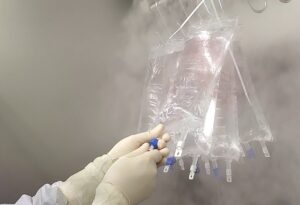
In the highly regulated world of controlled environments, airflow visualization testing—often referred to as smoke studies or fog testing—plays a pivotal role in ensuring the integrity of cleanrooms, biosafety cabinets, and compounding areas. This specialized service uses visible tracers (such as pharmaceutical-grade fog or smoke) to qualitatively assess airflow patterns, turbulence, and directional flow, verifying that contaminants are properly swept away from critical zones and that unidirectional airflow is maintained.
As of December 2025, the North American Airflow Visualization Testing and Certification Services Market is a niche yet essential segment within the broader cleanroom testing, inspection, and certification (TIC) ecosystem. Valued at approximately USD 59-70 million in 2022-2024 estimates, the market is projected to reach USD 83-90 million by 2030, growing at a steady CAGR of 4.5-5.5%. This growth is propelled by stringent regulatory mandates from the FDA, USP <797> and <800>, cGMP guidelines, and increasing demand in pharmaceuticals, biotechnology, and healthcare compounding. North America dominates global demand for these services, holding 35-40% of the worldwide market share, driven by the region’s mature pharmaceutical sector and rigorous compliance requirements.
This detailed article examines the mechanics of airflow visualization, key applications, market dynamics, leading providers, regulatory landscape, challenges, and emerging trends shaping this critical service market in North America through 2030.
What Is Airflow Visualization Testing?
Airflow visualization testing is a qualitative method to demonstrate and document airflow patterns in controlled environments. It involves introducing a visible medium—typically deionized water-based fog, glycerin smoke, or dry ice fog—into the space while recording video evidence under both at-rest and dynamic (in-operation) conditions.
Key objectives include:
- Verifying unidirectional (laminar) airflow in ISO Class 5 primary engineering controls (PECs).
- Identifying turbulence, dead zones, or reverse flows that could lead to contamination.
- Confirming proper containment in hazardous drug compounding areas (negative pressure per USP <800>).
- Supporting risk assessments for operator protection and product sterility.
Unlike quantitative tests (e.g., particle counting or HEPA integrity), visualization provides visual proof of design efficacy, often required for initial qualification and periodic requalification. Modern tools include high-density foggers (e.g., CRF4) for clearer imaging and real-time video analysis.
How Airflow Visualization Fits into Cleanroom Certification
Certification of cleanrooms and compounding areas typically involves a suite of tests, with airflow visualization as a cornerstone for compliance:
- Particle Counting: Measures non-viable particulates (ISO 14644-1).
- HEPA Filter Integrity: Leak testing with DOP/PAO.
- Airflow Velocity and Volume: Ensures adequate air changes per hour (ACH).
- Pressure Differentials: Cascade monitoring.
- Airflow Visualization: Qualitative pattern verification.
- Viable Sampling: Microbial monitoring.
Visualization is mandatory under USP <797> for sterile compounding and USP <800> for hazardous drugs, often semi-annually for high-risk areas. It integrates with cGMP, FDA 21 CFR Part 211, and IEST-RP-CC-006 guidelines.
Applications and End-User Industries
The primary demand stems from sectors requiring sterile or controlled environments:
- Pharmaceuticals and Biotechnology (60-70% market share): Sterile manufacturing, R&D cleanrooms.
- Compounding Pharmacies (20-25%): USP <797>/<800> compliance for IV admixture and hazardous drugs.
- Healthcare Facilities: Hospital pharmacies, surgical suites.
- Medical Devices and Electronics: Minor share for precision assembly.
In North America, the U.S. dominates (85-90% of regional demand), fueled by FDA oversight and a large base of 503B outsourcing facilities.
Market Size and Growth Trends
The North American market for airflow visualization testing and certification services is a specialized subset of the broader cleanroom TIC market (valued at USD 1.4-2 billion regionally in 2024).
| Year | Market Size (USD Million) | CAGR (%) | Key Notes |
|---|---|---|---|
| 2022 | 59.57 | – | Baseline per Verified Market Research |
| 2024 | ~65-70 | 4.5-5.0 | Post-COVID recovery in pharma |
| 2025 | ~68-75 | 4.48 | Steady regulatory-driven growth |
| 2030 | 83.67 | 4.48 | Projected peak |
North America leads globally, with the U.S. accounting for the lion’s share due to FDA-mandated semi-annual testing in compounding areas. Growth drivers include revisions to USP <797> (effective 2023 onward), increasing hazardous drug handling, and expansions in biologics manufacturing.
Key Players and Competitive Landscape
The market is fragmented, with specialized TIC firms dominating. Providers offer bundled services (visualization + full certification).
| Company | Headquarters | Key Strengths | Notable Clients/Services |
|---|---|---|---|
| Technical Safety Services (TSS) | USA | Comprehensive USP <797>/<800> testing | Nationwide pharmacy certification |
| CSI Testing | USA (MN) | 45+ years experience; Midwest/New England focus | Cleanroom and BSC visualization |
| Performance Validation | USA | Advanced foggers; risk-based studies | Pharma and healthcare |
| ENV Services Inc. | USA | Full-suite controlled environment testing | National coverage |
| Transcat | USA | Calibration + visualization | Life sciences focus |
| National Air Filter Services | USA | Airflow studies + filter replacement | Thousands of environments tested |
| Sinergix Testing | USA | Customized visualization protocols | Nationwide |
| Microrite, Inc. | USA | Consulting + testing | Risk assessments |
Regulatory Drivers
- USP <797>: Requires visualization for sterile compounding areas (semi-annual for medium/high-risk).
- USP <800>: Mandates for hazardous drugs, emphasizing containment verification.
- cGMP (FDA 21 CFR): Qualitative airflow proof for aseptic processing.
- ISO 14644: Supports visualization for classification.
- CETA Guidelines: Standards for testing procedures.
Non-compliance risks FDA warnings, recalls, or facility shutdowns, driving recurring demand.
Challenges and Opportunities
Challenges:
- Technician shortages and accreditation requirements.
- High costs for small compounding pharmacies.
- Evolving regulations (e.g., USP revisions).
- Supply chain issues for fog/smoke tracers.
Opportunities:
- Growth in 503B outsourcing and biologics.
- Integration with digital tools (real-time video, AI analysis).
- Expansion into Canada/Mexico with harmonized standards.
- Bundled services with environmental monitoring.
Future Trends
By 2030, expect:
- Advanced foggers with denser, non-residue tracers.
- Digital visualization (CFD modeling + physical studies).
- Increased frequency due to risk-based approaches.
- Sustainability focus (eco-friendly tracers).
The market will align with broader cleanroom TIC growth (5-7% CAGR regionally), emphasizing resilience post-pandemic.
Conclusion
The North American Airflow Visualization Testing and Certification Services Market, though niche, is indispensable for safeguarding product sterility and patient safety in pharmaceuticals and healthcare. With a projected value nearing USD 84 million by 2030, it reflects unwavering regulatory commitment amid industry expansion. For facilities navigating USP <797>/<800> and cGMP, partnering with accredited providers ensures not just compliance, but operational excellence. As biologics and personalized medicine surge, airflow visualization will remain a visual cornerstone of contamination control—proving that in cleanrooms, seeing truly is believing.