Tendon Repair refers to the surgical or conservative management strategies used to restore the structural and functional integrity of damaged tendons—dense, fibrous connective tissues that attach muscles to bones and transmit mechanical forces essential for movement. Tendon injuries range from acute ruptures (e.g., Achilles, rotator cuff, biceps) to chronic tendinopathies (degenerative conditions like tendinosis), affecting athletes, manual laborers, and the general population with age-related degeneration.
Tendon injuries are common, with Achilles tendon ruptures occurring at rates of 15-30 per 100,000 annually and rotator cuff tears affecting over 20% of individuals above age 60. Repair techniques have evolved from simple suturing in the early 20th century to advanced arthroscopic methods, biologic augmentation, and tissue engineering today. Successful repair aims to restore strength, flexibility, and range of motion while minimizing complications like re-rupture or adhesions. As of 2025, ongoing research focuses on regenerative approaches (stem cells, growth factors) to improve outcomes beyond traditional mechanical reconstruction.
Anatomy and Physiology of Tendons
Tendons are composed primarily of parallel collagen type I fibrils (70-80% dry weight) organized in a hierarchical structure: fibrils → fascicles → tendon units, embedded in a proteoglycan-rich matrix. Tenocytes maintain the extracellular matrix, while vascularity is limited, contributing to slow healing.
Key properties:
- High tensile strength (comparable to steel on weight basis).
- Low metabolic rate.
- Viscoelastic behavior (stiffness increases with load rate).
Injury disrupts this architecture, triggering an inflammatory response followed by proliferation and remodeling phases that often yield inferior scar tissue (type III collagen dominant) with reduced mechanical properties.
Common sites:
- Lower extremity: Achilles, patellar, quadriceps.
- Upper extremity: Rotator cuff (supraspinatus most frequent), biceps, flexor/extensor hand tendons.
Types of Tendon Injuries
- Acute Ruptures Complete tears from trauma or sudden overload (e.g., Achilles in middle-aged “weekend warriors”).
- Partial Tears Incomplete disruption; may progress if untreated.
- Chronic Tendinopathy Degenerative (tendinosis) with matrix disorganization, neovascularization, no overt inflammation.
- Lacerations Sharp trauma (hand flexor tendons common).
Classification systems (e.g., Kuhn for rotator cuff, Couvelaire for Achilles) guide treatment.
Diagnosis
Clinical:
- History: Mechanism, pain, weakness, palpable gap.
- Examination: Specific tests (Thompson for Achilles, Jobe for supraspinatus).
Imaging:
- Ultrasound: Dynamic, cost-effective for superficial tendons.
- MRI: Gold standard for soft tissue detail, tear size, retraction, fatty infiltration (Goutallier grading for rotator cuff).
- X-ray: Avulsion fractures.
Treatment Approaches
Treatment is individualized by tendon, injury type, patient age/activity level.
-
Conservative Management Indicated for partial tears, mild tendinopathy.
- Rest, ice, eccentric loading protocols (Alfredson for Achilles).
- Physical therapy: Progressive strengthening.
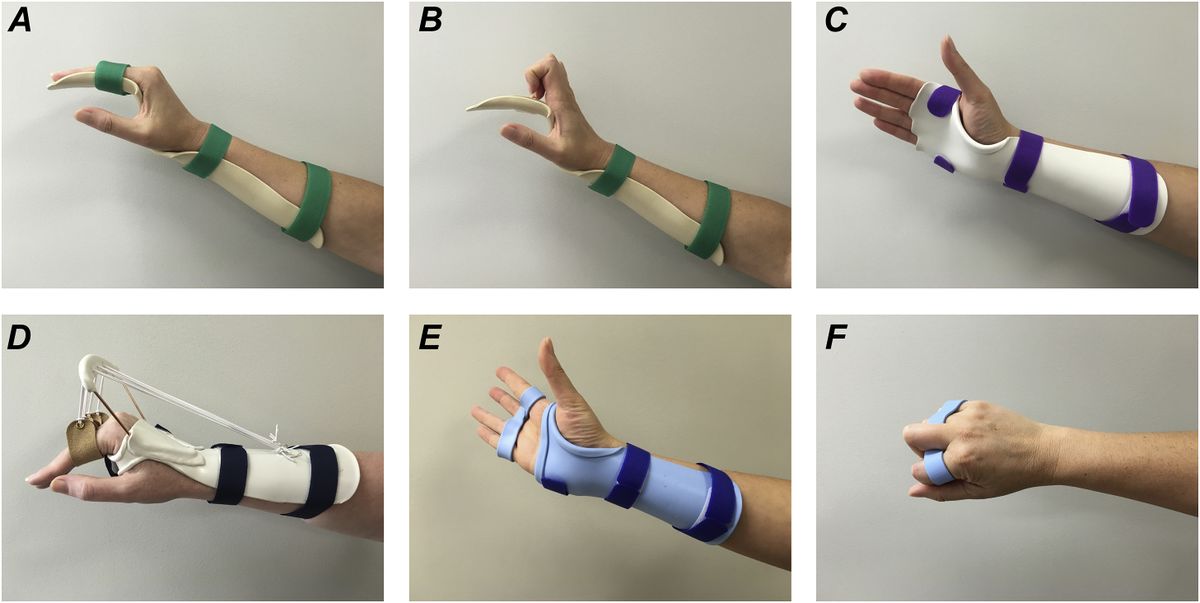
- Bracing/splinting.
- Injections: Platelet-rich plasma (PRP), corticosteroids (controversial due to weakening risk).
-
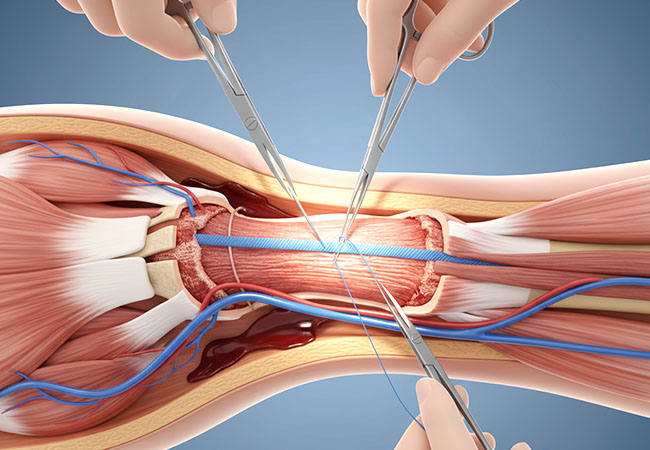
Surgical Repair Primary for complete ruptures or failed conservative care.
Open Repair Traditional; direct visualization, strong suturing (Krackow, Bunnell techniques).
Minimally Invasive/Percutaneous Smaller incisions, faster recovery (Achilles SpeedBridge).
Arthroscopic Shoulder rotator cuff, some ankle/hand tendons; knotless anchors, double-row fixation for better footprint restoration.
Tendon Transfer/Grafting Chronic/retracted tears: Local transfer (latissimus dorsi for massive rotator cuff) or allograft/autograft.
Augmentation Patches (dermal allograft, synthetic) for poor tissue quality.
-
Postoperative Rehabilitation Critical phase: Immobilization → passive → active motion → strengthening. Protocols vary (early motion for rotator cuff vs. protected for Achilles).
Emerging and Regenerative Therapies
Research focuses on enhancing healing:
- Biologics: PRP, bone marrow aspirate concentrate (BMAC), amniotic products.
- Stem Cells: Mesenchymal stem cells (adipose/bone marrow-derived) injected or scaffold-seeded.
- Growth Factors: Recombinant PDGF, TGF-β.
- Scaffolds: Collagen, synthetic meshes for reinforcement.
- Tissue Engineering: 3D-printed tendon constructs.
- Gene Therapy: Experimental modulation of healing pathways.
Early results promising for chronic tendinopathy; evidence limited for acute repair augmentation.
Complications
- Re-rupture (5-15% Achilles, 10-20% rotator cuff).
- Infection.
- Stiffness/adhesions.
- Nerve injury.
- Complex regional pain syndrome.
Risk factors: Smoking, diabetes, delayed repair.
Outcomes and Prognosis
- Acute repair: 80-95% good/excellent function.
- Chronic/retracted: Poorer; reverse shoulder arthroplasty alternative for irreparable rotator cuff.
- Return to sport: 6-12 months, variable by level.
Patient-reported outcomes (ASES, DASH, Constant scores) guide success.
Prevention
- Proper warm-up, conditioning.
- Load management in athletes.
- Ergonomic adjustments.
- Early intervention for tendinopathy.
Conclusion
Tendon repair encompasses a spectrum from conservative rehabilitation to advanced surgical reconstruction, tailored to injury characteristics and patient goals. While mechanical repair techniques have matured, achieving native tendon properties remains challenging due to biological limitations. Emerging regenerative therapies offer hope for improved healing and reduced re-injury rates. Multidisciplinary care involving surgeons, therapists, and patients optimizes outcomes, restoring function and quality of life after tendon injury. Ongoing research into biologics and tissue engineering continues to refine approaches in this evolving field.
More articles by ZMR Researche:
https://www.zionmarketresearch.com/de/report/filtered-storage-cabinets-market
https://www.zionmarketresearch.com/de/report/packaging-market
https://www.zionmarketresearch.com/de/report/respiratory-syncytial-virus-vaccine-market
https://www.zionmarketresearch.com/de/report/data-center-support-infrastructure-market
https://www.zionmarketresearch.com/de/report/retail-earplugs-market